Course contents
- 01Variables
- 02Primitive Data Types
- 03Operators
- 04Conditionals
- 05Arrays
- 06Array methods and properties
- 07Objects
- 08Functions
- 09Callbacks
- 10Arrow functions
- 11Promises
- 12Async and await
- 13Loops
- 14DOM Manipulation
- 15Syntax parser
- 16Execution context and hoisting
- 17Call stack
- 18WebAPI and setTimeout
- 19Closures
- 20Function Constructors and Prototypes
- 21By value vs by reference
Call stack
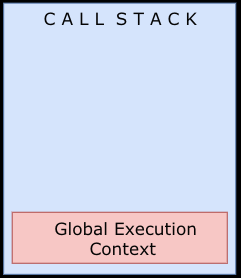
You can visualize the call stack as a pile of books. Each book represents a function that’s invoked in our code. The “book” that’s on top is the function that’s currently running. We start “piling those books” after our code has been loaded to the webpage.
Let’s say we have the following code:
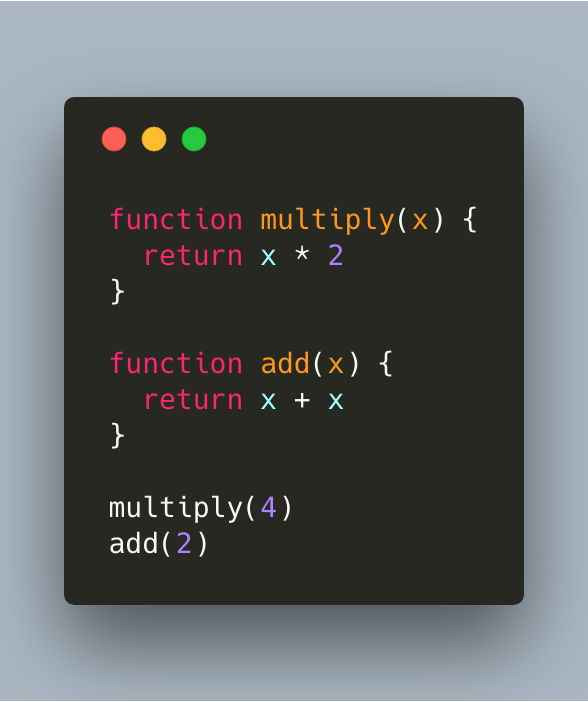
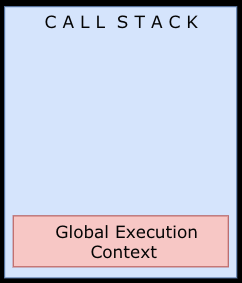
Whenever this code gets loaded on a webpage, the first function that’s being added to the call stack is the Global Execution Context.
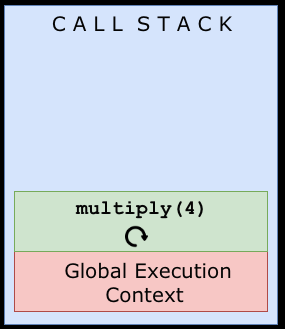
Then, we invoke the multiply function. This get added to the stack.
Then, when the function returns, it gets popped off the stack.
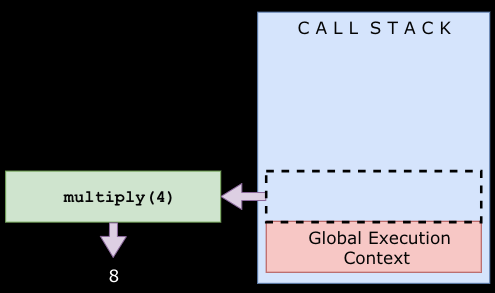
Then, the add function gets called, and the same steps are taken for this function. Once the add function gets invoked, it gets added to the stack, and popped off once it returned a value.
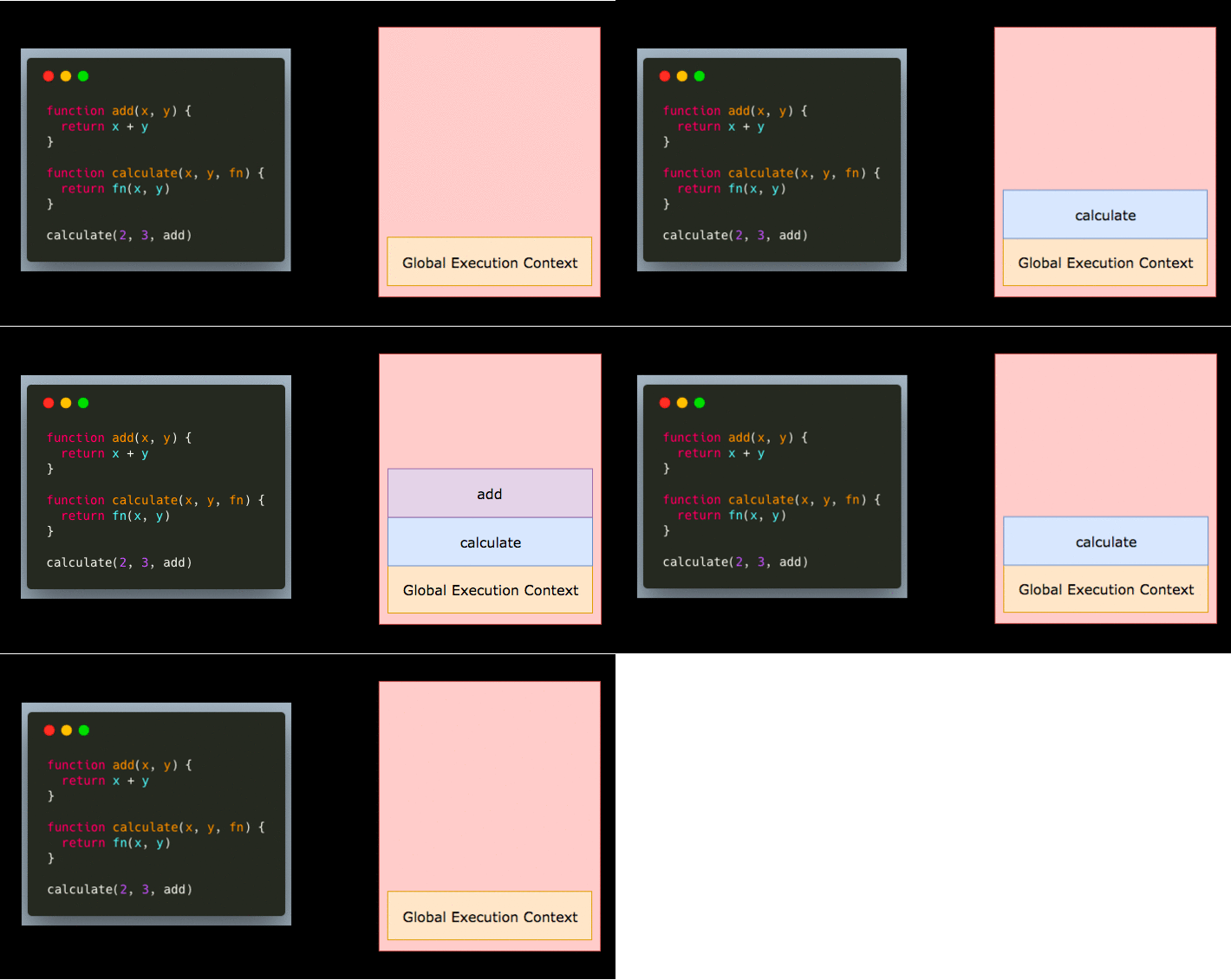
Now, imagine that a function calls another function. That means that the function doesn’t yet return, so it doesn’t get popped off the stack, and it invokes another function. This function then gets added to the top of the stack, and only pops off once that function returns. Example:
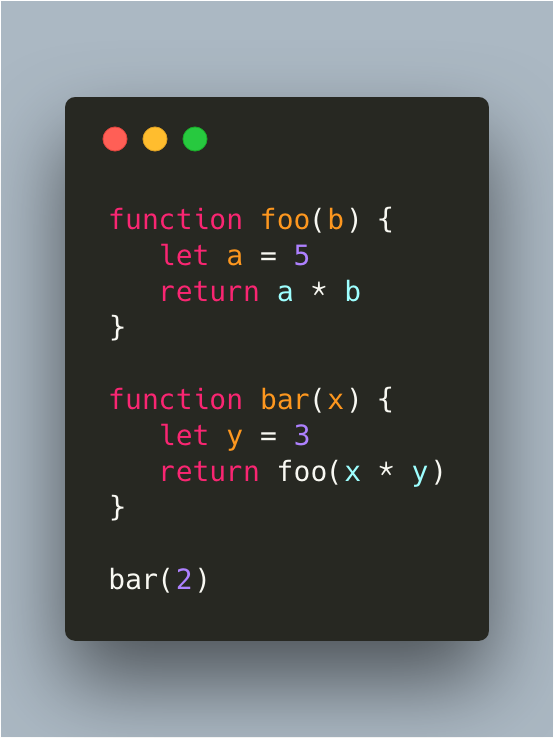
After the function has been invoked, the call stack would look like:
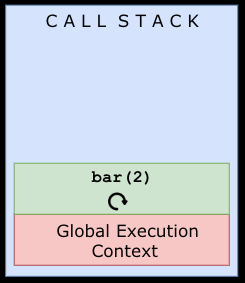
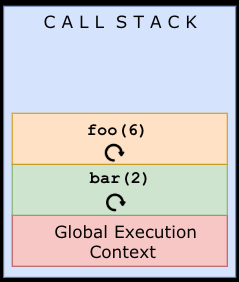
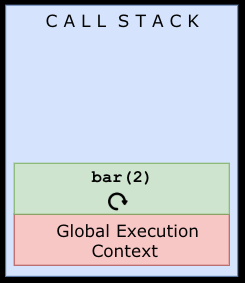
References and further reading
- MDN: Call stackA short definition with an example.
- Wikipedia: Call stackThe data structure behind function calls.